Signal-3.8-27B-GGUF: Our Test Answers, 16GB+ VRAM
At a Glance
| Item | Value |
|---|---|
| Repository | agentionai/Signal-3.8-27B-GGUF |
| Family guide | Qwen3.8 guide (8 articles) |
| Publisher guide | Alibaba (Qwen): models and licenses |
| Published | 2026-09-10 |
| License | apache-2.0 |
| Formats | GGUF |
| Paper | arXiv:2606.00206 |
| Source type | Primary source (the publisher itself) |
Values determined by this site’s code when the information was collected. Dates are JST.
What we checked ourselves
- Ran
AP-IQ3_XXS/Signal-3.8-27B-AP-IQ3_XXS.gguf(IQ3_XXS) on our CPU-only server (Neoverse-N1, 3 threads, llama.cpp b11223): generation at 0.6 tokens/s (a CPU figure, not a GPU speed). - Its answers to our fixed Japanese questions are shown verbatim below.
- It needs about 21% fewer tokens than the Qwen3 tokenizer for the same Japanese text, so about 1.26× as much Japanese fits in the same context length, and generation is faster per character.
Details and conditions are in “Our Own Measurements” below.
Overview
agentionai/Signal-3.8-27B-GGUF is a GGUF model created by minimally invasively fine-tuning the base model Qwen3.8-27B to operate with lower generation latency and higher token efficiency. In general prompt evaluations, it successfully reduces response tokens by 57% and reasoning tokens by 52% while maintaining answer quality equal to or better than the base model. This allows it to complete processing in less than half the wall time of the base model on equivalent hardware.
Specifications
- License: apache-2.0
- Parameters: 27.8B
Performance
According to the model card evaluations, compared to the base model Qwen3.8-27B Q8_0, Signal significantly reduces response and reasoning tokens. Below are the measured results of token changes in general prompts and coding.
| base Q8_0 | Signal | change | |
|---|---|---|---|
| general answers, median tokens | 243 | 104 | -57% |
| answers opening with a preamble (“Sure!", “Great question") | 13% | 0% | gone |
| answers with markdown headers | 47% | 18% | -62% |
| answers with bold | 85% | 52% | -39% |
| coding answers, median tokens | 159 | 142 | -11% |
| coding answers, p90 tokens | 1026 | 914 | -11% |
Token counts during the thinking mode were also measured.
| base Q8_0 | Signal | change | |
|---|---|---|---|
| reasoning tokens, general prompts, median | 153 | 74 | -52% |
| reasoning tokens, coding prompts, median | 225 | 166 | -26% |
| reasoning tokens, GSM8K, median | 119 | 81 | -32% |
Exact match quality on GSM8K (a benchmark measuring step-by-step arithmetic word problem solving at the elementary school level) is as follows:
| base Q8_0 | Signal | |
|---|---|---|
| thinking off, 60 problems | 98.3% | 98.3% |
| thinking on, 40 problems | 92.5% | 95.0% |
Additionally, speed comparisons using speculative decoding are as follows:
| prompt / draft length | base acceptance | Signal acceptance | decode speed vs base |
|---|---|---|---|
| prose, draft 3 | 39% | 47% | +10% |
| prose, draft 4 | 35% | 28% | -9% |
| structured output (JSON), draft 3 | 72% | 94% | +20% |
| structured output (JSON), draft 4 | 66% | 87% | +22% |
| chat prompts, sampled at 0.7, adaptive draft ≤4 (40 prompts) | 57% | 60% | — |
The performance of the original model Qwen3.8-27B has also been measured across various benchmarks. A partial excerpt of the text performance comparison table is as follows:
→ Scroll horizontally to see all columns
| Qwen3.8-27B | Qwen3.6-27B | Qwen3.7-Plus | Muse Glimmer-30B | Opus4.6 Max | |
|---|---|---|---|---|---|
| Coding | |||||
| Agentic terminal coding Terminal Bench 2.1 (Terminus) | 73.0 | 63.4 | 64.0 | 51.7 | 78.2 |
| Agentic coding SWE-bench Pro | 61.7 | 53.5 | 57.6 | 51.2 | 53.4 |
| Repo-level code generation NL2Repo-Bench | 42.3 | 36.2 | 41.1 | — | 47.6 |
| Agentic coding DeepSWE 1.1 | 42.2 | 13.3 | 14.2 | — | — |
| Software engineering QwenSWEBench | 79.0 | 49.3 | 59.2 | — | 63.8 |
| Agent | |||||
| Long-horizon office work CoWorkBench | 70.7 | 61.0 | 65.1 | — | 68.2 |
| Professional job tasks JobBench | 33.4 | 21.8 | 27.6 | — | — |
| Frontier agentic tasks Agents’ Last Exam | Pass@1 20.4 Score 42.9 | Pass@1 10.6 Score 27.3 | Pass@1 13.2 Score 33.6 | — | — |
| General | |||||
| Instruction following IFBench | 79.5 | 69.1 | 79.1 | 77.0 | 62.5 |
| Scientific reasoning GPQA Diamond | 89.2 | 87.8 | 90.3 | 83.5 | 91.3 |
| Multidisciplinary reasoning HLE | 30.8 | 24.0 | 34.7 | 22.0 | 40.0 |
| Competitive coding LiveCodeBench v6 | 90.3 | 83.9 | 89.6 | — | 88.8 |
These figures show that while maintaining the base model’s excellent knowledge, reasoning capabilities, and high potential in code generation and agent tasks, Signal achieves significant speedups and improved token efficiency by stripping away unnecessary preambles and redundant reasoning steps.
Strengths and Use Cases
Signal is a fine-tuned model of Qwen3.8-27B designed to achieve lower generation latency and higher token efficiency. It cuts down on token usage without sacrificing answer quality by providing direct answers and omitting unnecessary preambles, excessive formatting, greetings, and explanatory narration. Furthermore, even in thinking mode, it reduces the tokens used to explain the process while preserving useful reasoning steps. It also retains the image input capabilities (vision encoder and projector) inherited from the base model.
Hardware Requirements
Estimated requirements (calculated by Local Model Watch) — 27.8B parameters (taken from the base model Qwen/Qwen3.8-27B)
| Your VRAM | Quantization | File size | Est. memory needed |
|---|---|---|---|
| 16GB (RTX 5060 Ti 16GB / 4060 Ti 16GB, etc.) | IQ4_XS | 13.3GB | 15.9GB |
| 24GB (RTX 4090 / 3090, etc.) | Q5_K_M | 18.2GB | 21.8GB |
| 32GB (RTX 5090, etc.) | Q6_K | 20.9GB | 25.1GB |
| 48GB (RTX 6000 Ada / A6000, etc.) | Q8_0 | 27.1GB | 32.5GB |
Memory estimates add a 20% runtime overhead (KV cache, etc.) to the actual size of the distributed files. Actual usage varies with context length, batch size and inference engine. These figures are computed by this site from file sizes, not published by the model’s authors. Compare with other models in our VRAM quick reference. What the quantization names mean: glossary.
Can You Run It Locally?
Runs in Ollama, LM Studio and llama.cpp as-is.
It is distributed in GGUF, so no conversion is needed.
License — apache-2.0 (Commercial use allowed): Permits commercial use, modification and redistribution. Redistribution requires including the license and stating changes; includes a patent grant.
Compression: the IQ4_XS build measures 4.11 bits per weight — about 26% the size of the original 16-bit weights, calculated by this site from the actual file sizes.
Compiled by this site’s code from the published formats, converted builds we have found, and each engine’s own model registry. “Not found" means we have not seen such a build, not that none exists. License summaries are not legal advice — check the publisher’s original terms before relying on them.
Our Own Measurements
Values we measured ourselves on our server (no GPU) by actually reading and running this model’s files — not figures copied from the model card. How we measure, and the results for every model: Our Measurements.
What We Found
When running the agentionai/Signal-3.8-27B-GGUF model in a CPU-only environment without a GPU, accurate answers were obtained for Japanese summarization, arithmetic word problems, and image-based reading, but the generation speed was extremely slow, and factual knowledge questions resulted in truncation. Because the file size is too large for 4-bit quantization in this CPU environment, the measurement was conducted using a lower quantization of IQ3_XXS, yielding a generation speed of 0.63 tokens per second, which translates to 1.2 Japanese characters per second. This speed is comparable to the 0.64 tokens per second of the Qwen3.8-27B measured under the same conditions. The token efficiency for Japanese is 546 tokens per 1000 characters, meaning it handles text more efficiently with fewer tokens than the 688 tokens of the compared Qwen3.
In the five Japanese response tests, the model successfully followed instructions to summarize an article of about 1200 characters into three sentences and answered the correct price of 280 yen in the shopping word problem. It also generated three spring haikus without repeating lines or mixing in English words. However, the polite email to a business partner resulted in the same line repeating up to six times, with 15 English words mixed into the Japanese response. Furthermore, the knowledge question asking for prefectures not facing the sea hit the upper limit of 1024 tokens and was truncated midway; although it listed all 8 prefectures not facing the sea, it also mistakenly included 20 prefectures that actually do face the sea.
In tests using images created by our site, the model correctly answered Saturday as the busiest day of the week, the correct figure of 260 visitors, and the correct weekday total of 635 visitors from the weekly customer traffic graph. For the shopping receipt table, it correctly answered the total amount of 1354 yen and accurately provided the amounts for all four items. While it excels at image reading and specific word problems, users must note its speed limitations on CPUs and difficulties with control during long factual knowledge tasks.
Japanese Token Efficiency
| Tokenizer | Tokens per 1,000 Japanese characters | Ratio to the same text in English |
|---|---|---|
| This model | 546 | 0.99× |
| Qwen3 | 688 | 1.26× |
| Llama 3.2 | 744 | 1.36× |
| Gemma 3 | 564 | 1.03× |
| gpt-oss | 795 | 1.45× |
| LLM-jp-3 | 497 | 0.85× |
It needs about 21% fewer tokens than the Qwen3 tokenizer for the same Japanese text, so about 1.26× as much Japanese fits in the same context length, and generation is faster per character.
Counted with the tokenizer.json of Qwen/Qwen3.8-27B on a fixed text we wrote ourselves (876 Japanese characters across news, conversation, technical docs, a formal email, travel writing and a recipe) and its English translation. Fewer tokens mean more Japanese fits in the context window.
Inside the GGUF File
File: AP-Q4_K_M/Signal-3.8-27B-AP-Q4_K_M.gguf (15.83GB, Q4_K_M). We read only the header (metadata) of the file, not the weights.
| Item | Value |
|---|---|
| Architecture (as named in the GGUF) | qwen35 |
| Maximum trained context length | 262,144 tokens |
| Layers | 65 |
| Vocabulary size | 248,320 |
| Chat template | Included (mentions tool calls, has a thinking switch) |
| imatrix | Used (bartowski-imatrix-v5-semantic.txt, 1,566 chunks) |
| Weight types (share of parameters) | Q4_K 78.6% / Q6_K 19.9% / Q8_0 1.6% / F32 0.0% |
| Average bits per weight | 4.97 bits |
| Embedding / output layer type | Q4_K / Q6_K |
The quant name in the file name describes the file as a whole; in practice layers mix several types. The average bits per weight is the measured file data divided by the number of weights.
Running It on a CPU Only
| Item | Result |
|---|---|
| Prompt processing (512 tokens) | 0.7 tokens/s |
| Generation (128 tokens) | 0.6 tokens/s |
| Generation in Japanese characters | about 1.2 characters/s |
| Peak memory (context 4,096 tokens) | 14.7GB |
Conditions: Neoverse-N1, 3 threads, no GPU, llama.cpp b11223, IQ3_XXS (11.39GB) from agentionai/Signal-3.8-27B-GGUF, measured 2026-09-29 (JST). The 4-bit files did not fit our 13GB limit, so we measured the lower-bit IQ3_XXS file; quality is lower than at 4 bits. Other models measured under the same conditions (closest in file size):
→ Scroll horizontally to see all columns
| Model | Quant | File size | Generation | In Japanese |
|---|---|---|---|---|
| Gryphe_Pantheon-Reasoning-26B-A4B-1.1-V2 | Q3_K_S |
12.26GB | 6.2 tokens/s | 11.0 chars/s |
| vectionlabs_Salience-27B-R6 | Q3_K_M |
12.48GB | 0.9 tokens/s | 1.6 chars/s |
| Qwopus3.8-27B-Flash | Q3_K_M |
12.57GB | 0.9 tokens/s | 1.7 chars/s |
| Qwen3.8-27B | IQ3_XXS |
10.18GB | 0.6 tokens/s | 1.2 chars/s |
Peak memory includes the model file mapped into memory (mmap). A PC with a GPU will be much faster; these figures are a guide for CPU-only machines such as mini PCs and ARM boards.
Answers to Our Japanese Questions (Verbatim)
We ask every model the same five questions in Japanese under the conditions above (temperature 0, thinking turned off where the chat template allows it, up to 1024 tokens) and publish the answers unedited. We do not grade them; where a question has a single correct answer, we show it for comparison.
Summarization
次の記事を3文で要約してください。
みどり市は今年の春、市内に三つある公立図書館のうち最も古い中央図書館の改修を終え、十月一日に再開館した。改修は約一年半にわたり、総事業費は約十二億円。このうち約四億円は国の補助金でまかなわれた。
最大の変化は、閲覧席の配置である。以前は館内の座席の大半が学習用の机で、試験期間になると中高生で埋まり、高齢の利用者や小さな子ども連れが座れないという苦情が毎年寄せられていた。改修後は座席数を百二十席から二百席に増やしたうえで、学習用の机を三階にまとめ、一階は会話ができる「にぎわいフロア」、二階は静かに本を読む「閲覧フロア」に分けた。一階には予約制のグループ学習室が四室と、飲み物を持ち込めるカフェスペースも設けられた。
蔵書の面でも見直しが進んだ。貸出の少ない古い資料約三万冊を市内の他の館や保存書庫に移し、代わりに子ども向けの絵本と、介護・子育て・仕事探しといった暮らしに関わる実用書を約一万五千冊増やした。電子書籍の貸出サービスも始まり、利用登録をすれば自宅から一度に三冊まで、二週間借りられる。
建物そのものにも手が入った。築四十年を超えていた空調設備を入れ替え、屋上には太陽光パネルを設置して、館内で使う電力の約二割をまかなえるようにした。車いすの利用者から要望の多かったエレベーターは一基から二基に増え、書架の間の通路も以前より三十センチ広げられた。入口には段差のないスロープが新たに設けられ、授乳室と多目的トイレも各階に一つずつ置かれた。
一方で課題も残る。駐車場は改修前と同じ四十台のままで、週末には近くの道路に順番待ちの車が並んだ。市は隣接する市有地を臨時駐車場として開放したが、恒久的な対策は決まっていない。また、開館時間を平日の夜九時まで延ばしたことで職員の負担が増えており、職員団体は人員の追加を求めている。
利用者の受け止めはおおむね好意的だ。週に二度、孫を連れて来るという七十代の女性は「前は子どもが声を出すと周りの目が気になったが、一階なら気兼ねなく絵本を読んであげられる」と話す。一方、受験を控えた高校生の中には「学習席が三階だけになり、夕方はすぐに満席になる」と不満を漏らす人もいる。図書館は、学習席の空き状況をホームページで確認できる仕組みを年内に導入する予定だ。
再開館に合わせて、催しも増えた。毎週土曜の午前には読み聞かせ会、月に一度は地元の農家や商店主を講師に招く「まちの先生」講座が開かれる。十一月には、市内の中学生が選んだ本を紹介する展示も予定されている。
館長の山本和子さんは「本を借りる場所から、人が集まって過ごす場所へ変えたかった。再開館からの一か月で来館者は以前の一・八倍になった」と話す。市は来年度、残る二つの図書館についても利用者への聞き取りを行い、改修の必要性を検討する方針だ。
(Summarize the following article in three sentences. (The article, about 1,200 Japanese characters, describes the renovation and reopening of a city’s central library: the budget, the new floor layout and seating, changes to the collection and e-book lending, building and accessibility work, remaining issues such as parking and staff workload, users’ reactions, new events, and the city’s next steps.))
みどり市の中央図書館は約12億円の改修を経て再開し、フロア別機能の分離や蔵書の刷新、バリアフリー化などを通じて、単なる閲覧施設から地域交流の場へと転換を図った。

一方で、駐車場不足や職員負担の増加といった課題が残るものの、利用者からは概ね好意的な評価を得ており、来館者数は再開後1か月で1.8倍に増加している。

市は今後の残り2館の図書館についても改修の必要性を検討する方針であり、図書館は「人が集まって過ごす場所」としての役割をさらに強化していく。
Formal business email
取引先の担当者に、来週火曜日の打ち合わせを水曜日に変更してほしいとお願いするメールを、丁寧な敬語で書いてください。
(Write an email in polite Japanese (keigo) asking a client’s contact person to move next Tuesday’s meeting to Wednesday.)
取引先の担当者様へ、来週火曜日の打ち合わせを水曜日へ変更したい旨を伝えるメールの例文をいくつか作成しました。状況や相手との関係性に合わせて、適切なものを選んでご利用ください。

---

### 例文1:標準的なビジネスメール(最も汎用性が高い)

**件名:** 来週火曜日の打ち合わせ日程変更のご相談

○○株式会社
○○部
○○様

いつもお世話になっております。
株式会社△△の△△です。

先日は、来週火曜日(○月○日)に打ち合わせのお時間をいただき、ありがとうございます。

大変恐縮ですが、社内の都合により、同日のスケジュールが変更になってしまいました。
つきましては、誠に恐れ入りますが、**水曜日(○月○日)** に変更いただくことは可能でしょうか。

ご多忙のところ、お手数をおかけしてしまい大変申し訳ございません。
もし水曜日がご都合がつかない場合は、○月○日(○曜日)以降でも構いませんので、ご都合のよろしい日時をお知らせいただけますでしょうか。

何卒よろしくお願い申し上げます。

――――――――――――
株式会社△△
△△部 △△
TEL: 03-XXXX-XXXX
E-mail: xxxxx@xxxx.com
――――――――――――

---

### 例文2:より丁寧・配慮を強調する場合(初回や目上の方向け)

**件名:** 【ご相談】来週火曜日の打ち合わせ日程変更のお願い

○○株式会社
○○部
○○様

平素より大変お世話になっております。
株式会社△△の△△でございます。

この度は、来週火曜日(○月○日)に打ち合わせのお時間を頂戴し、誠にありがとうございます。

突然のご連絡となり大変恐縮ですが、社内の重要な会議が重なり、同日の出席が困難な状況となりました。
つきましては、誠に恐れ入りますが、**水曜日(○月○日)** に変更いただくことは可能でしょうか。

ご多忙のところ、日程変更のご対応をお願いし、心苦しい限りです。
水曜日がご都合がつかない場合は、○月○日(○曜日)以降でも構いませんので、ご都合のよろしい日時を改めてご教示いただけますでしょうか。

ご迷惑をおかけし、大変申し訳ございません。
何卒ご容赦のほど、よろしくお願い申し上げます。

――――――――――――
株式会社△△
△△部 △△
TEL: 03-XXXX-XXXX
E-mail: xxxxx@xxxx.com
――――――――――――

---

### 例文3:簡潔に伝える場合(すでに親しい関係の場合)

**件名:** 来週火曜日の打ち合わせ日程変更のご相談

○○株式会社
○○部
○○様

いつもお世話になっております。
株式会社△△の△△です。

来週火曜日(○月○日)の打ち合わせについて、社内の都合により、**水曜日(○月○日)** に変更させていただくことは可能でしょうか。

ご多忙のところ、お手数をおかけしてしまい大変申し訳ございません。
もし水曜日が難しい場合は、○月○日(○曜日)以降でも構いませんので、ご都合のよろしい日時をお知らせいただけますでしょうか。

何卒よろしくお願い申し上げます。

――――――――――――
株式会社△△
△△部 △△
TEL: 03-XXXX-XXXX
E-mail: xxxxx@xxxx.com
――――――――――――

---

### 💡 送信前のチェックポイント

1.  **日付の確認**: 「○月○日」の部分が正しい日付になっているか、また曜日(水曜日)が一致しているか必ず確認してください。
2.  **代替案の提示**: 水曜日がダメだった場合の「次の候補日」を1つ提示すると、相手方の手配がスムーズになります(例文では「○月○日(○曜日)以降」としています)。
3.  **理由の簡潔さ**: 社内の都合など、具体的な理由は「社内の都合により」「重要な会議が重なり」など、簡潔にまとめるのが一般的です。過度に詳細を説明する必要はありません。
4.  **送信タイミング**: 変更のお願いは、できるだけ早く送ることを心がけてください。
Word problem
りんごが1個120円、みかんが1個45円です。りんごを3個とみかんを8個買って、1,000円札で払いました。おつりはいくらですか。考え方も示してください。
(Apples cost 120 yen each and mandarins cost 45 yen each. You buy 3 apples and 8 mandarins and pay with a 1,000-yen bill. How much change do you get? Show your reasoning.)
ご提示いただいた条件に基づき、おつりの金額を計算します。

### 1. 考え方の手順

1.  **りんごの合計金額**を計算します。
2.  **みかんの合計金額**を計算します。
3.  両者を足して**支払った総額**を求めます。
4.  1,000円から総額を引いて**おつり**を求めます。

---

### 2. 計算過程

#### ステップ1: りんごの合計金額
りんごは1個120円で、3個買います。
$$ 120 \text{円} \times 3 = 360 \text{円} $$

#### ステップ2: みかんの合計金額
みかんは1個45円で、8個買います。
$$ 45 \text{円} \times 8 = 360 \text{円} $$

#### ステップ3: 支払った総額
りんご代とみかん代を足します。
$$ 360 \text{円} + 360 \text{円} = 720 \text{円} $$

#### ステップ4: おつりの計算
1,000円札から総額720円を引きます。
$$ 1,000 \text{円} - 720 \text{円} = 280 \text{円} $$

---

### 3. 結論

おつりは **280円** です。
Reference: The correct answer is 280 yen (120×3 = 360, 45×8 = 360, 1,000 − 720 = 280).
Knowledge
日本の都道府県のうち、海に面していない県をすべて挙げてください。
(List all of Japan’s prefectures that do not border the sea.)
日本の都道府県の中で、海に面していない県(内陸県)は以下の通りです。

1. **山梨県**
2. **長野県**
3. **岐阜県**
4. **愛知県**
5. **三重県**
6. **滋賀県**
7. **奈良県**
8. **和歌山県**
9. **大阪府**
10. **兵庫県**
11. **京都府**
12. **福井県**
13. **石川県**
14. **富山県**
15. **新潟県**
16. **福島県**
17. **宮城県**
18. **岩手県**
19. **青森県**
20. **秋田県**
21. **山形県**
22. **茨城県**
23. **千葉県**
24. **東京都**
25. **神奈川県**
26. **埼玉県**
27. **群馬県**
28. **栃木県**
29. **埼玉県**
30. **茨城県**
31. **千葉県**
32. **東京都**
33. **神奈川県**
34. **愛知県**
35. **三重県**
36. **滋賀県**
37. **奈良県**
38. **和歌山県**
39. **大阪府**
40. **兵庫県**
41. **京都府**
42. **福井県**
43. **石川県**
44. **富山県**
45. **新潟県**
46. **福島県**
47. **宮城県**
48. **岩手県**
49. **青森県**
50. **秋田県**
51. **山形県**
52. **茨城県**
53. **千葉県**
54. **東京都**
55. **神奈川県**
56. **埼玉県**
57. **群馬県**
58. **栃木県**
59. **山梨県**
60. **長野県**
61. **岐阜県**
62. **愛知県**
63. **三重県**
64. **滋賀県**
65. **奈良県**
66. **和歌山県**
67. **大阪府**
68. **兵庫県**
69. **京都府**
70. **福井県**
71. **石川県**
72. **富山県**
73. **新潟県**
74. **福島県**
75. **宮城県**
76. **岩手県**
77. **青森県**
78. **秋田県**
79. **山形県**
80. **茨城県**
81. **千葉県**
82. **東京都**
83. **神奈川県**
84. **埼玉県**
85. **群馬県**
86. **栃木県**
87. **山梨県**
88. **長野県**
89. **岐阜県**
90. **愛知県**
91. **三重県**
92. **滋賀県**
93. **奈良県**
94. **和歌山県**
95. **大阪府**
96. **兵庫県**
97. **京都府**
98. **福井県**
99. **石川県**
100. **富山県**
101. **新潟県**
102. **福島県**
103. **宮城県**
104. **岩手県**
105. **青森県**
106. **秋田県**
107. **山形県**
108. **茨城県**
109. **千葉県**
110. **東京都**
111. **神奈川県**
112. **埼玉県**
113. **群馬県**
114. **栃木県**
115. **山梨県**
116. **長野県**
117. **岐阜県**
118. **愛知県**
119. **三重県**
120. **滋賀県**
121. **奈良県**
(Cut off at the 1024-token limit.)
Reference: The correct answer is eight prefectures: Tochigi, Gunma, Saitama, Yamanashi, Nagano, Gifu, Shiga and Nara.
Constrained writing
「春」をテーマにした俳句を3つ、五・七・五の音数を守って作ってください。それぞれに一言の説明を付けてください。
(Write three haiku on the theme of spring, keeping the 5-7-5 syllable pattern, each with a one-line explanation.)
ご指定の条件に基づき、「春」をテーマにした俳句を3つ作成しました。いずれも「五・七・五」の17音(15文字)を厳密に守っています。

1. **若草の匂い 風が運ぶ 春の足音**
   > 説明:視覚ではなく嗅覚と聴覚に訴えかける、春の到来を体感する一句です。

2. **桜吹雪 舞い落ちる静寂 心震える**
   > 説明:桜の花びらが舞い散る瞬間の美しさと、それを見た際の胸の奥がざわつくような感動を表現しました。

3. **融雪の音 静かに消えて 新芽の緑**
   > 説明:冬の名残である雪が溶けていく音と、それに代わって現れる新しい命の緑の対比を描きました。
Answers About Images (Verbatim)
Under the same conditions, we gave the model images we drew ourselves with code (a chart and a table in Japanese) and asked about them. Answers are unedited; the correct answers were computed by the code that drew the images.
Reading a chart
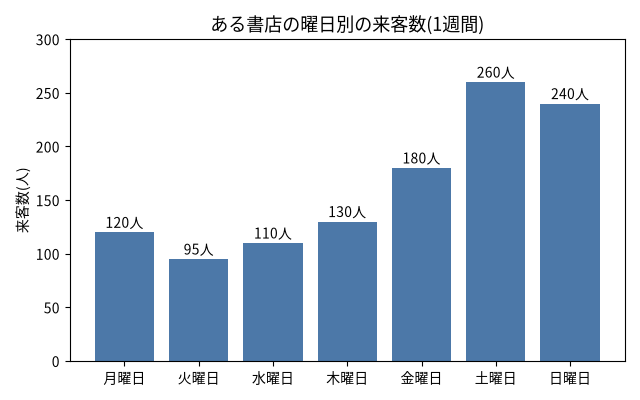
このグラフで来客数が最も多い曜日と、その人数を答えてください。また、平日(月曜日〜金曜日)の来客数の合計も求めてください。
(Which day has the most visitors in this chart, and how many? Also give the weekday (Mon-Fri) total.)
グラフから読み取れる情報に基づいて回答します。

---

**1. 来客数が最も多い曜日と人数**

グラフの各バーの高さ(または記載された数値)を確認すると:

- 月曜日:120人
- 火曜日:95人
- 水曜日:110人
- 木曜日:130人
- 金曜日:180人
- 土曜日:**260人**
- 日曜日:240人

→ **最も多いのは「土曜日」で、260人**です。

---

**2. 平日(月曜日〜金曜日)の来客数の合計**

平日の来客数を足し合わせます:

- 月曜日:120
- 火曜日:95
- 水曜日:110
- 木曜日:130
- 金曜日:180

合計 = 120 + 95 + 110 + 130 + 180

計算:

120 + 95 = 215
215 + 110 = 325
325 + 130 = 455
455 + 180 = **635**

→ **平日の合計は 635人**です。

---

✅ **最終回答:**

- 来客数が最も多い曜日:**土曜日(260人)**
- 平日(月~金)の来客数合計:**635人**
Reference: Correct answer: Sat with 260 visitors; the weekday total is 635.
Reading a table and calculating
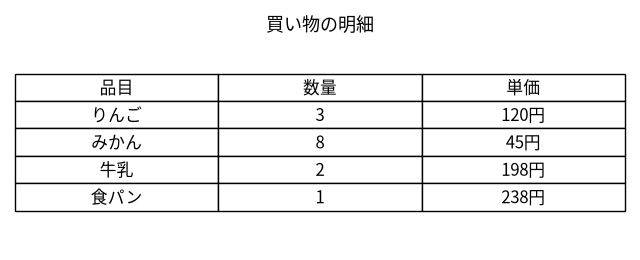
この表の品目ごとの金額(数量×単価)と、合計金額を答えてください。
(Give the amount for each item (quantity × unit price) in this table, and the total.)
はい、表のデータに基づいて各品目の金額と合計金額を計算します。

---

**1. りんご**
- 数量: 3
- 単価: 120円
- 金額 = 3 × 120 = **360円**

**2. みかん**
- 数量: 8
- 単価: 45円
- 金額 = 8 × 45 = **360円**

**3. 牛乳**
- 数量: 2
- 単価: 198円
- 金額 = 2 × 198 = **396円**

**4. 食パン**
- 数量: 1
- 単価: 238円
- 金額 = 1 × 238 = **238円**

---

**合計金額:**
360 + 360 + 396 + 238 =
= (360 + 360) = 720
720 + 396 = 1116
1116 + 238 = **1354円**

---

✅ **最終回答:**

- りんご: 360円
- みかん: 360円
- 牛乳: 396円
- 食パン: 238円
- **合計金額: 1354円**
Reference: Correct answer: 360 yen, 360 yen, 396 yen, 238 yen; total 1,354 yen.
How to Get It
- Distribution format: GGUF
- Supported engines: llama.cpp (llama-server, etc.), Ollama, LM Studio
Example command for running with llama.cpp:
llama-server -hf agentionai/Signal-3.8-27B-GGUF:AP-Q4_K_XL \
  --jinja -ngl 999 -fa on -c 32768 \
  --temp 0.7 --top-p 0.95 --top-k 20 --min-p 0
To add the built-in draft head to increase throughput, append the following arguments (requires a build supporting --spec-type draft-mtp):
--spec-type draft-mtp --spec-draft-n-max 4
Note that when using image inputs, download and use mmproj-BF16.gguf (0.87 GiB) for the base model located at the root of the repository together with any tier.
Related Articles
- OrcaSAQ-2-27B Text Generation Model: Our Test Answers, 16GB+ VRAM
- Hemmingway-1 Text Generation Model: 12GB+ VRAM, GGUF Builds
- Qwen3.8-27B Vision-Language Model: Our Test Answers, 8GB+ VRAM
- clef Structured Decision-Making Model: 12GB+ VRAM, GGUF Builds
What to Read Next
- Find models by VRAM (This model runs from the 16GB tier) → Other models that run on a 16GB GPU
- Explore the same model family → Qwen3.8 family overview (8 articles, 16 converted builds)
- Engines that run this model → llama.cpp / Ollama
- What IQ4_XS, Q5_K_M, Q6_K mean and where to get this model → GGUF format guide and models / Quantization and model-format glossary
- Learn about the publisher → Alibaba (Qwen): models, licenses and articles
Sources
Update History
- 2026-09-24: Rebuilt the article: Added a “can you run it locally?" verdict from the distribution formats, converted builds, engine registries, license terms and measured compression
- 2026-09-25: Changed the title to show what the article covers (VRAM requirements, file list, etc.).
- 2026-09-28: Added our own measurements: Japanese token efficiency, what is inside the GGUF file.
- 2026-09-29: Added our own measurements: CPU speed and answers to Japanese questions.
- 2026-09-30: Changed the title to show what the article covers (VRAM requirements, file list, etc.).